Kitchen notes · a little help before you start
Choo Chee Salmon
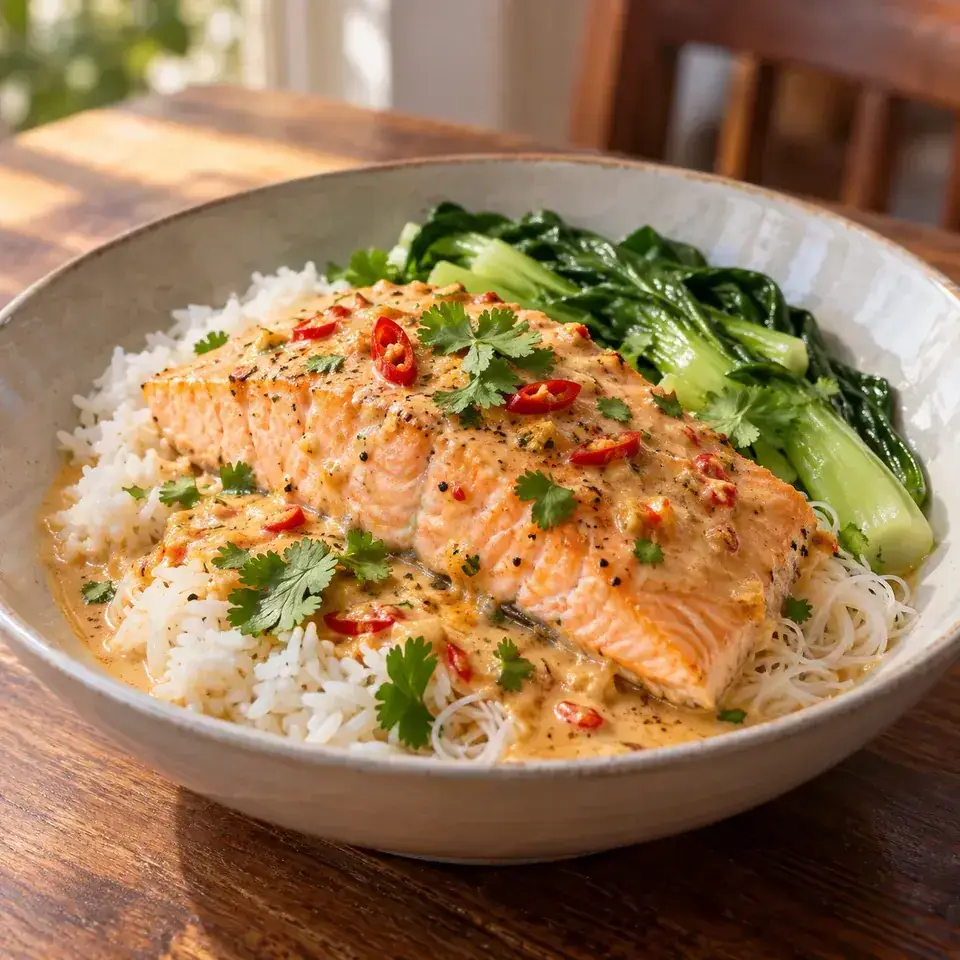
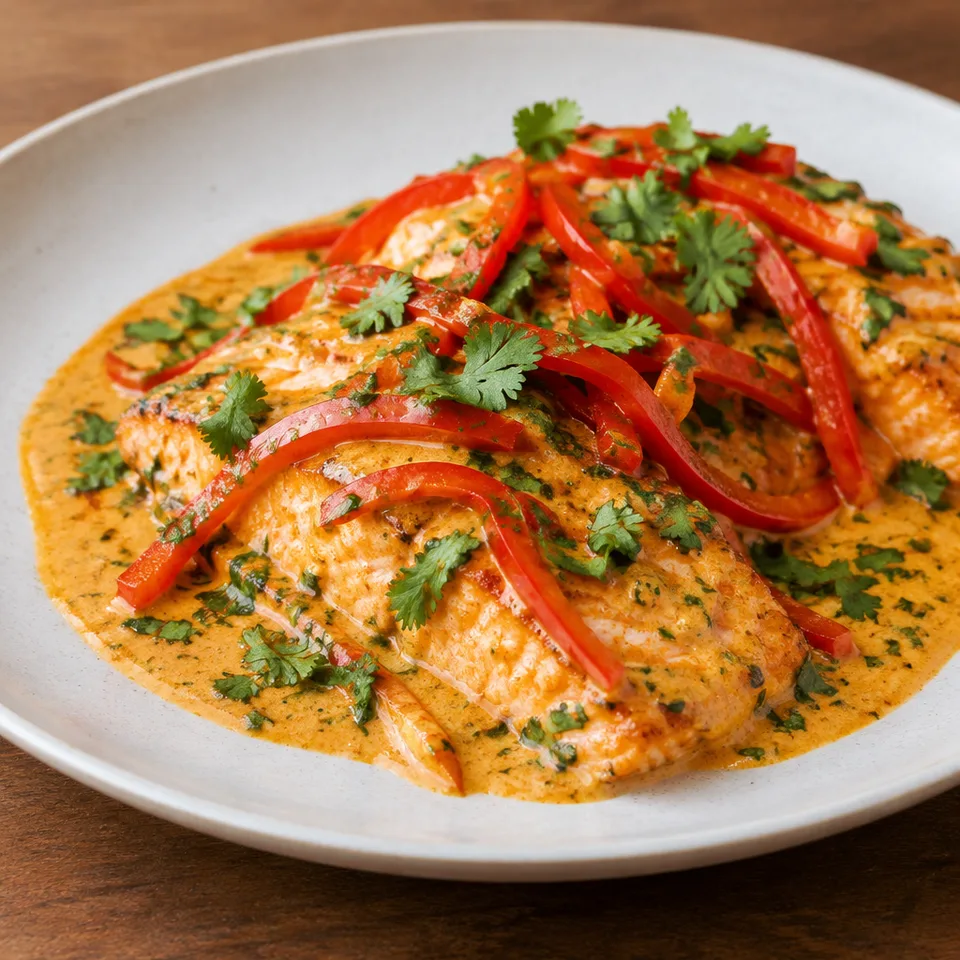
Salmon with a generous red curry sauce makes an inviting change at dinner. The creamy coating has a little citrus brightness, with fresh pepper and cilantro over the top. Spoon the sauce onto your fish while it is hot and enjoy how it catches around each piece.
- Prep
- 5 min
- Cook
- 15 min
- Original yield
- Serves 3
- Ingredients
- 9 listed
Make it part of your week
Recipe categories & planning details
- Meal type
- Main course
- Primary protein
- Fish
- Preparation & total time
- Prep: 15 minutes or less
A few quick notes
1. Dry salmon before searing
Pat the fillets with paper towels before their short skillet cook, flipping gently with a spatula before moving to a plate.
2. Wipe the skillet for sauce
After plating the cooked salmon, wipe the pan before heating the first coconut cream portion for the curry paste.
3. Cook paste until glossy
Stir the red curry paste occasionally in the first cream portion until glossy and fragrant before adding the remaining sauce ingredients.
Get to know the ingredients
Divided coconut cream
Use half for cooking the curry paste and add the rest afterward with sugar, fish sauce, cilantro and lime zest.
Julienned red pepper
Cut the bell pepper into fine strips and keep it for topping the sauced salmon when serving.
Lime zest
The zest simmers in the sauce with the remaining coconut cream and seasoning, adding its citrus note before coating the fish.
Let’s make it
Choose your servings, then check things off as you go.
Original recipe: Serves 3. Original quantities shown.
Check ingredients as you prepare them. These checks stay on this page.
How to make it
0 of 3 steps completeMake room for Choo Chee Salmon
Review ingredients in your pantry before anything is added. Meal plans use your household size; grocery-only additions use the servings selected above.
The last little job
Spoon curry over the plated fish
Coat the salmon generously with the finished sauce and serve immediately with cilantro and red pepper over the top.
A little more help as you go
Adjust paste to its heat
Try starting with the smaller curry-paste amount because brands vary, tasting before adding more for a hotter sauce.
A coconut milk option
You can use full-fat unsweetened coconut milk instead of coconut cream for the sauce.
A few questions you might have
Does the salmon cook in the curry sauce?
It is cooked separately in the skillet and moved to a plate before the sauce is made and spooned over it.
Can the garnish be hotter?
You can use hot chili peppers instead of the mild red bell pepper if you want a spicier finish.
Does all the cilantro go on top?
Half simmers in the sauce with lime zest and seasonings; more cilantro tops the coated salmon at serving.
When do I lower the heat for the sauce?
After adding the remaining cream, sugar, fish sauce, cilantro and zest, lower to medium for the brief thickening simmer.
Is fish sauce added to the first cream portion?
It joins after the curry paste has cooked, together with the remaining coconut cream, sugar, cilantro and lime zest.
Any more cooking tips?
Recipe Adapted from Gourmet Traveller, January 2004 When cooking the curry sauce, I recommend adding 2 to 3 tablespoons of red curry paste first, as every brand has a different level of spiciness. You may taste the sauce and decide if you’d like to add more to make the dish spicier before coating the salmon. Use either coconut cream or full-fat unsweetened coconut milk to create a rich and flavorful sauce. This recipe simmers the Choo Chee sauce with cilantro and lime zest, imparting a delightful citrusy aroma and flavor. It’s an excellent substitute for fresh or dried makrut lime leaves. Garnish the dish with a mild and sweet red bell pepper to add a freshness. You may also use hot chili peppers for a spicier taste.
Storage & reheating safety
For cooked, perishable leftovers, refrigerate within 2 hours (1 hour above 90°F), using shallow containers for prompt cooling. Keep the refrigerator at 40°F or below, use refrigerated leftovers within 3–4 days, and reheat hot leftovers to 165°F, checked with a food thermometer. Follow any shorter package limit.
These are general safety limits, not a tested storage or freezing recommendation for this particular dish. USDA leftovers guidance · Safe cooking temperatures
Recipe source: rasamalaysia.com. Ingredient names and quantities may be adapted for the pantry.
Preparation notes follow the recipe shown here.