Kitchen notes · a little help before you start
Breaded Pork Chops
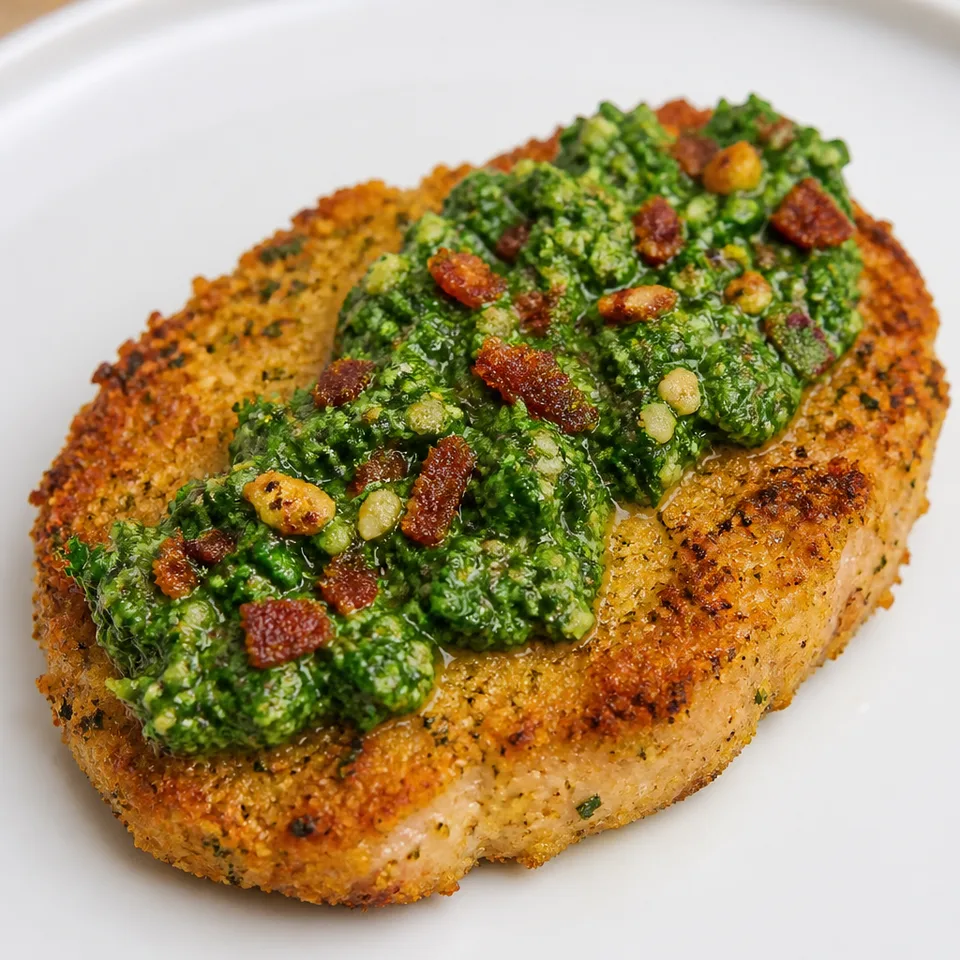
Cheesy cracker crumbs give these pork chops a savory crust, with green kale pesto adding a rich topping. Bacon and walnuts lend the pesto a little extra substance alongside the basil. A slice through the crust and into the pork makes an appealing bite with some pesto over it.
- Prep
- 20 min
- Cook
- 30 min
- Total
- 50 min
- Original yield
- Serves 6
- Ingredients
- 14 listed
Make it part of your week
Recipe categories & planning details
- Meal type
- Dinner
- Primary protein
- Pork · Seafood
- Cuisine
- American
- Cooking method
- Baking · Baked & roasted
- Preparation & total time
- Prep: 16–30 minutes · Total: 31–60 minutes
A few quick notes
1. Make fine coating crumbs
Pulse the crackers, cheese and seasonings until crumbly, then transfer the mixture to a shallow coating dish.
2. Press on the coating
After the crumb, egg and second crumb dips, press the breading onto the chops with your fingers.
3. Turn during baking
Flip the chops after the first baking stage and continue until they reach the stated internal temperature.
Get to know the ingredients
Oyster crackers
The crackers make the crumb coating with cheddar and oregano. You can use other crackers or breadcrumbs, too.
Milk and egg
Whisk the milk and egg together in a separate bowl until well incorporated for the middle coating dip.
Kale pesto
Process the kale pesto ingredients until smooth, scraping the food processor bowl as needed and tasting before serving.
Let’s make it
Choose your servings, then check things off as you go.
Original recipe: Serves 6. Original quantities shown.
Check ingredients as you prepare them. These checks stay on this page.
How to make it
0 of 6 steps completeMake room for Breaded Pork Chops
Review ingredients in your pantry before anything is added. Meal plans use your household size; grocery-only additions use the servings selected above.
The last little job
Rest before the pesto
Let the baked chops stand for the stated rest, then transfer to plates and top with kale pesto.
A little more help as you go
Thin pesto if preferred
The directions allow more olive oil in the pesto if you prefer a thinner consistency for topping the chops.
Keep leftovers separately
Store the pesto in a tightly sealed jar, and keep the pork tightly wrapped or covered separately.
A few questions you might have
How thick should the pork chops be?
Pound the chops to three-quarters of an inch, evening out any thicker pieces.
What order is the breading?
Coat the chops in crumbs, dip them in the egg mixture, then coat them in crumbs again and press.
What temperature confirms the pork is done?
The directions give 145 degrees F internally, followed by a short rest before plating and topping with pesto.
Can I use another hard cheese?
Yes, you can use any hard cheese in the breading. Parmesan also works with the pesto.
How should I reheat leftover pork?
Place it on a baking sheet in a 350-degree-F oven until just warmed through.
Any more cooking tips?
Get even thickness. Pound any thicker pork chops to the same thickness. When it comes to thickness, I find that 3/4-inch is perfect for this recipe. Cut off the fat. Remove the fat around the pork chops’ edges. Allow resting time. Post-cooking, let the pork chops rest for around 5 minutes to redistribute the juices, giving you a juicier, more flavorful bite. Different cheese. Any hard cheese is suitable for the breading. Parmesan pairs beautifully with the pesto. Swap the crackers. Replace oyster crackers with any other type, like Saltines or Ritz. Alternatively, breadcrumbs could also be used. Refrigerate leftovers. Seal pesto tightly in a clean glass jar and keep in the fridge for up to 2 weeks. Keep pork wrapped or covered tightly in the fridge for up to 4 days. Freeze. Wrap the pork tightly in plastic and freeze for up to 3 months. Let thaw thoroughly in the fridge overnight. Reheat in the oven. Place on a baking sheet in a 350°F oven until just warmed through.
Storage & reheating safety
For cooked, perishable leftovers, refrigerate within 2 hours (1 hour above 90°F), using shallow containers for prompt cooling. Keep the refrigerator at 40°F or below, use refrigerated leftovers within 3–4 days, and reheat hot leftovers to 165°F, checked with a food thermometer. Follow any shorter package limit.
These are general safety limits, not a tested storage or freezing recommendation for this particular dish. USDA leftovers guidance · Safe cooking temperatures
Recipe source: diethood.com. Ingredient names and quantities may be adapted for the pantry.
Preparation notes follow the recipe shown here.