Kitchen notes · a little help before you start
Philly Cheesesteak Stuffed Peppers
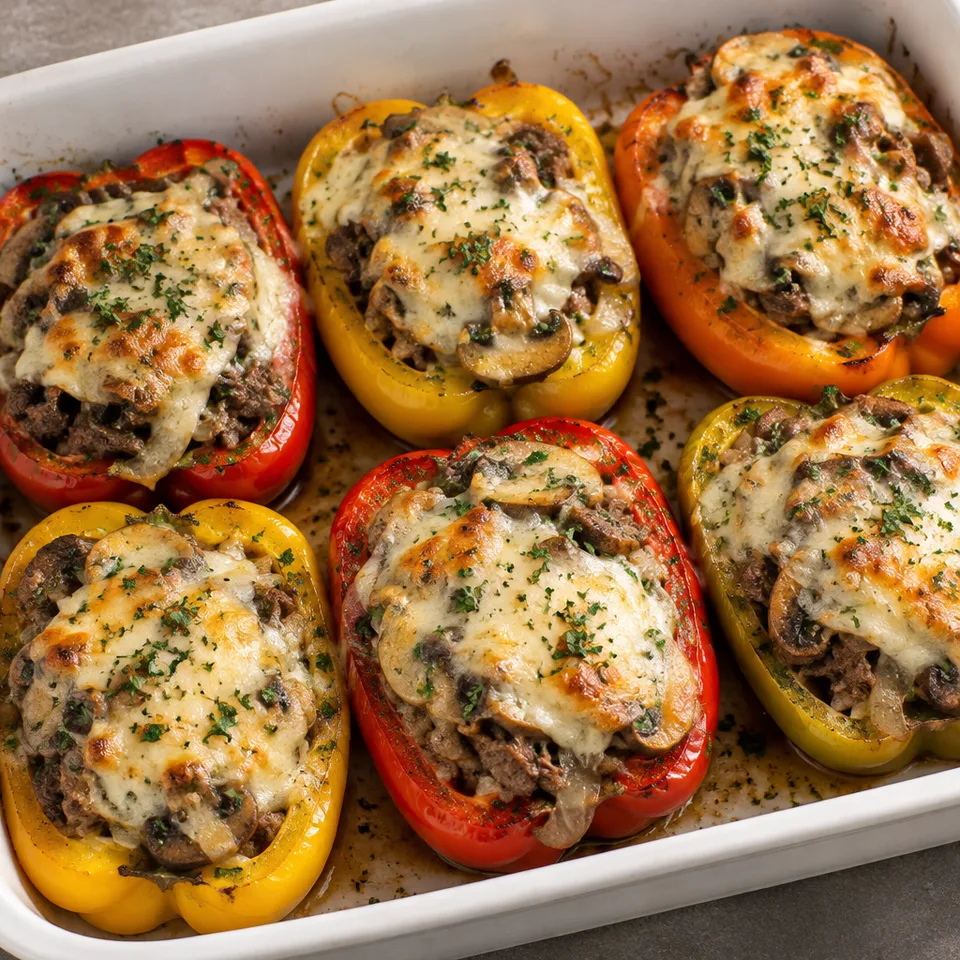
Soft peppers hold tender steak and browned mushrooms under a bubbling layer of provolone. Cheese tucked beneath the filling makes the peppers especially rich, while the sweet onion and pepper keep the familiar cheesesteak flavors balanced in each bite.
- Original yield
- Serves 6
- Ingredients
- 9 listed
Make it part of your week
Recipe categories & planning details
- Meal type
- Main course
- Cuisine
- American
- Cooking method
- Baking · Baked & roasted
A few quick notes
1. Let the peppers start first
The pepper halves need their head start in the oven before the filling goes in. That way they soften enough to eat neatly, while still holding the cheesesteak mixture and cheese.
2. Brown the vegetables well
Give the onions time to soften, then let the mushrooms cook until the vegetables are browned and tender. That bit of browning makes the filling taste fuller before the steak is added.
3. Keep the steak quick
The steak is sliced very thinly, so it only needs a short cook in the pan. Add it after the vegetables are done and stop when it's just cooked through.
Get to know the ingredients
Bell peppers
Any color bell pepper works here. Halve them, remove the seeds and ribs, and set them cut side up so they make little cups for the cheese and filling.
Very thin steak slices
Use flank, rib eye, or sirloin, but make sure the steak is very thinly sliced. The short cooking time depends on thin pieces that cook through fast in the hot pan.
Provolone slices
The cheese goes in twice: one slice inside each pepper half before filling, and another on top before broiling. That gives you melted cheese through the middle and a browned top.
Let’s make it
Choose your servings, then check things off as you go.
Original recipe: Serves 6. Original quantities shown.
Check ingredients as you prepare them. These checks stay on this page.
How to make it
0 of 9 steps completeMake room for Philly Cheesesteak Stuffed Peppers
Review ingredients in your pantry before anything is added. Meal plans use your household size; grocery-only additions use the servings selected above.
The last little job
The last little job
After broiling, finish with the chopped parsley and serve while the provolone is still melted and golden on top. It only needs that small fresh sprinkle at the end.
A little more help as you go
Season in stages
Salt and pepper show up more than once for a reason: the peppers get seasoned before baking, then the vegetables and steak are seasoned as they cook. It keeps the filling from tasting flat.
Watch the broiler
The final broil is brief, just long enough to melt and brown the top cheese. Stay nearby, because broiled cheese can go from golden to too dark quickly.
A few questions you might have
Do the peppers need to be fully cooked before filling?
No. Bake them first so they soften, then fill them and finish under the broiler. They should still be sturdy enough to hold the steak, vegetables, and cheese.
Why does the cheese go inside the pepper before the filling?
That first slice melts under the hot cheesesteak mixture, so the pepper has cheese inside as well as on top. Add the second slice after filling for the browned, melted finish.
Should I cook the steak before the onions and mushrooms?
Cook the onions and mushrooms first, then add the seasoned steak. The steak is very thinly sliced and only needs a few minutes, so adding it last helps keep it from overcooking.
How do I know the filling is ready for the peppers?
The vegetables should be browned and tender, and the steak should be just done. Once that happens, spoon the mixture into the cheese-lined pepper halves.
Can I skip the parsley at the end?
The parsley is the final garnish after broiling. It adds a fresh finish, but the stuffed peppers are otherwise assembled and cooked before it goes on.
Storage & reheating safety
For cooked, perishable leftovers, refrigerate within 2 hours (1 hour above 90°F), using shallow containers for prompt cooling. Keep the refrigerator at 40°F or below, use refrigerated leftovers within 3–4 days, and reheat hot leftovers to 165°F, checked with a food thermometer. Follow any shorter package limit.
These are general safety limits, not a tested storage or freezing recommendation for this particular dish. USDA leftovers guidance · Safe cooking temperatures
Recipe source: dinneratthezoo.com. Ingredient names and quantities may be adapted for the pantry.
Preparation notes follow the recipe shown here.