Kitchen notes · a little help before you start
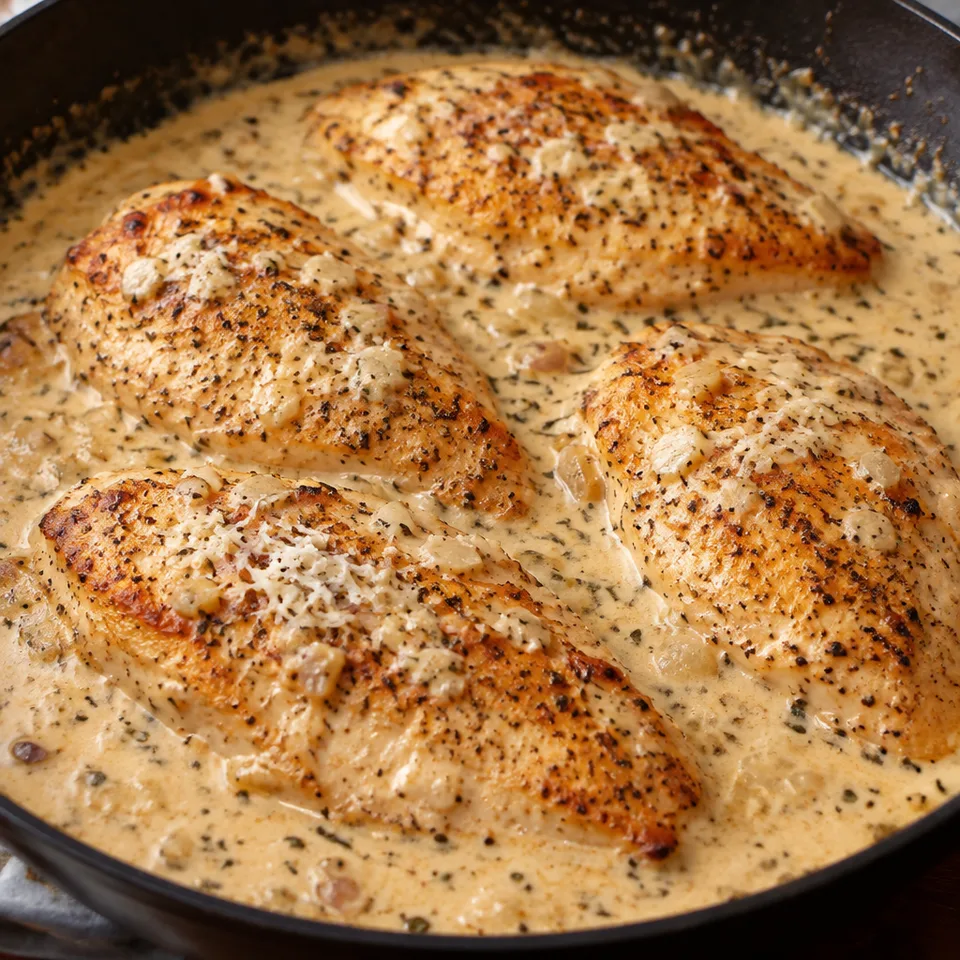
One Pan Creamy Garlic Chicken Breasts
Golden chicken with garlic cream sauce is easy to look forward to. The browned coating catches the Parmesan-rich sauce, while shallots add a gentle sweetness underneath.
- Prep
- 10 min
- Cook
- 20 min
- Total
- 30 min
- Original yield
- Serves 4
- Ingredients
- 13 listed
Make it part of your week
Recipe categories & planning details
- Meal type
- Main course
- Primary protein
- Chicken
- Cuisine
- American
- Cooking method
- One pan · One pot & sheet pan
- Preparation & total time
- Prep: 15 minutes or less · Total: 30 minutes or less
A few quick notes
1. Give the chicken room
A crowded pan steams instead of browns, so use a wide skillet if you have one. If not, brown the chicken in batches and keep the heat steady.
2. Keep the browned bits
After the chicken comes out, don't wipe the pan. The shallots, garlic and broth are meant to pick up the flavor left behind from browning.
3. The sauce thickens at the end
The sauce only needs to thicken slightly before the Parmesan and chicken go back in. Once the floured chicken is nestled into the pan, it helps the sauce tighten up a bit more.
Get to know the ingredients
Light flour coating
The flour is for a thin dredge, not a heavy breading. Shake off any excess so the chicken browns neatly and later helps the cream sauce thicken.
Shallots or onion
Finely minced shallots melt into the sauce quickly. A small yellow onion is listed as an option, so use that if it's what you have, still chopped fine.
Fresh Parmesan helps
The Parmesan goes in after the cream has thickened slightly. Fresh grated is called out as best here, and it should stir into the warm sauce more easily.
Let’s make it
Choose your servings, then check things off as you go.
Original recipe: Serves 4. Original quantities shown.
Check ingredients as you prepare them. These checks stay on this page.
How to make it
0 of 6 steps completeMake room for One Pan Creamy Garlic Chicken Breasts
Review ingredients in your pantry before anything is added. Meal plans use your household size; grocery-only additions use the servings selected above.
The last little job
The last little job
Slip the chicken back into the pan and move the pieces around in the sauce. That small bit of flour on the outside helps bring the creamy garlic sauce together around the chicken.
A little more help as you go
If the sauce still feels thin
If the sauce needs thickening, mix 2 tsp cornstarch with 1 Tbsp heavy cream, stir it in, then cook and stir for another minute or so.
Add the garlic after the shallots
The shallots get a few minutes to soften first. Garlic only needs about 30 seconds here, which keeps it from sitting too long in the hot pan before the liquid goes in.
A few questions you might have
Do I need to cook the chicken all the way through before making the sauce?
Yes. The chicken is cooked until golden brown, then set aside while the sauce starts. It goes back into the pan at the end to sit in the sauce, not to finish from raw.
Why reduce the heat before adding the shallots and garlic?
The pan is hot from browning chicken over medium high heat. Dropping to medium low gives the shallots time to soften and keeps the garlic from cooking too aggressively.
Can I use chicken stock instead of broth?
Yes. Use chicken broth or stock, and either one gets poured in to loosen the browned bits from the bottom of the pan.
How thick should the sauce be before the chicken goes back in?
It should be just slightly thickened. The Parmesan and the flour coating on the chicken will help it come together more once everything is back in the pan.
Should I clean the pan after browning the chicken?
No. Leave the pan as it is after the chicken comes out. The recipe specifically keeps those browned bits so the broth can pull them into the sauce.
Any more cooking tips?
If sauce isn't thickening up to your liking, mix 2 tsp of cornstarch with 1 Tbsp heavy cream and stir into the sauce. Cook and stir another minute or so and it should thicken up nicely.
Storage & reheating safety
For cooked, perishable leftovers, refrigerate within 2 hours (1 hour above 90°F), using shallow containers for prompt cooling. Keep the refrigerator at 40°F or below, use refrigerated leftovers within 3–4 days, and reheat hot leftovers to 165°F, checked with a food thermometer. Follow any shorter package limit.
These are general safety limits, not a tested storage or freezing recommendation for this particular dish. USDA leftovers guidance · Safe cooking temperatures
Recipe source: thechunkychef.com. Ingredient names and quantities may be adapted for the pantry.
Preparation notes follow the recipe shown here.