Kitchen notes · a little help before you start
Hearts Of Palm Pasta (Tuscan Style)
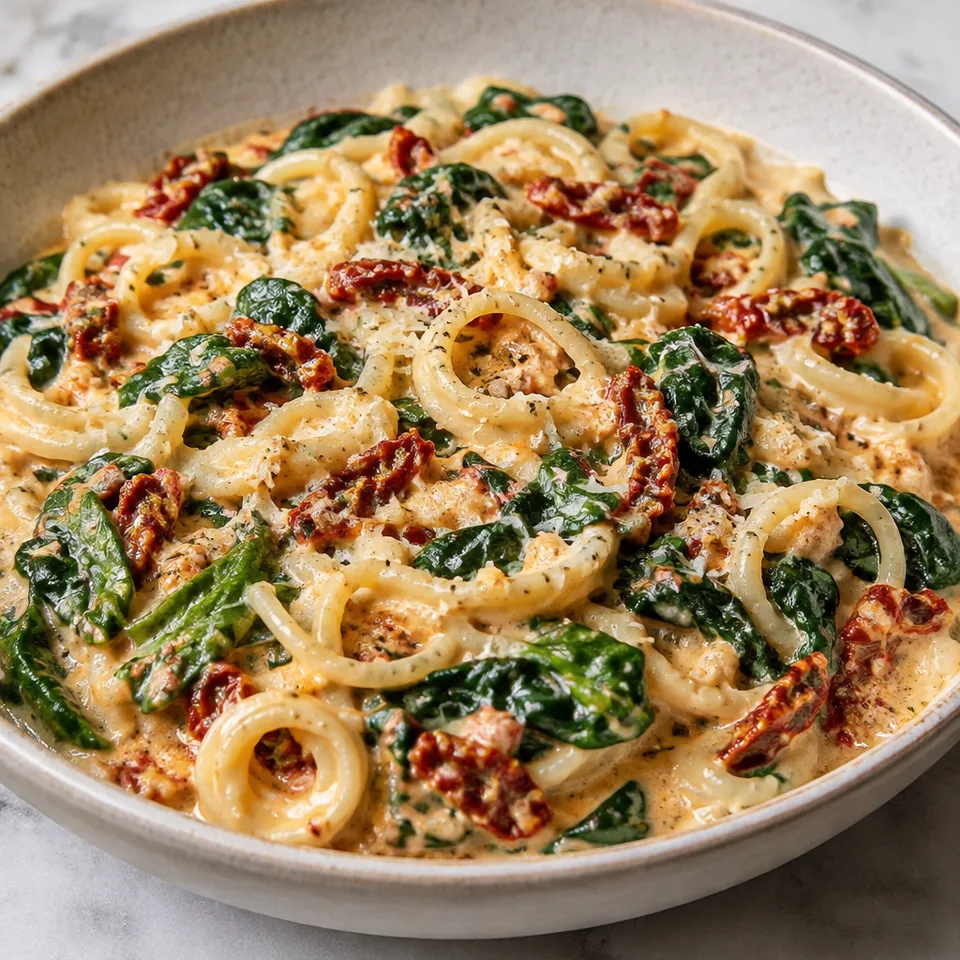
Hearts of palm noodles are worth a try when a creamy, savory bowl is what you feel like eating. The sun-dried tomatoes give this one a little intensity against the mild noodles.
- Prep
- 10 min
- Cook
- 18 min
- Total
- 28 min
- Original yield
- Serves 6
- Ingredients
- 10 listed
Make it part of your week
Recipe categories & planning details
- Meal type
- Main course
- Cuisine
- Italian
- Preparation & total time
- Prep: 15 minutes or less · Total: 30 minutes or less
- Dish type
- Pasta
A few quick notes
1. Rinse the noodles well
Give the hearts of palm pasta a really thorough rinse before boiling. It helps freshen it up, and tossing it with tongs in the colander makes it easier to rinse all the strands evenly.
2. Pat dry after boiling
After the noodles boil, drain them and pat them dry before adding them to the skillet. Extra water can loosen the cream sauce more than you want.
3. Let the sauce reduce first
Bring the cream and broth to a gentle boil, then give them a few minutes to simmer down before the pasta goes in. That short reduction is what gives the sauce body.
Get to know the ingredients
Hearts of palm pasta
This pasta is drained, rinsed, boiled, drained again, and patted dry before it meets the sauce. Those steps matter here because the noodles are already vegetable-based, not dry pasta starting from raw.
Sun-dried tomatoes
Chop the sun-dried tomatoes so they can soften quickly with the garlic and spread through the sauce. They only saute briefly, so smaller pieces work better in each bite.
Parmesan cheese
The Parmesan melts in at the very end, with the heat turned low. Stir constantly as it goes in, and use a little more if the sauce still looks too loose.
Let’s make it
Choose your servings, then check things off as you go.
Original recipe: Serves 6. Original quantities shown.
Check ingredients as you prepare them. These checks stay on this page.
How to make it
0 of 8 steps completeMake room for Hearts Of Palm Pasta (Tuscan Style)
Review ingredients in your pantry before anything is added. Meal plans use your household size; grocery-only additions use the servings selected above.
The last little job
The last little job
Finish off the heat with salt and pepper after the Parmesan has melted in. Taste then, because the cheese and reduced sauce have already brought their own seasoning.
A little more help as you go
Keep the spinach bright
Add the spinach near the end and stir often. It only needs a minute or two, just until wilted and still bright green, so don't let it disappear into the sauce.
If the noodles finish early
The sauce can wait for the pasta. If the hearts of palm noodles aren't ready when the sauce has reduced, turn off the heat and cover the skillet to keep it warm.
A few questions you might have
Why boil hearts of palm pasta if it's not regular dried pasta?
Boiling it briefly softens the noodles for this dish before they simmer in the sauce. The recipe still has you rinse and drain first, then pat dry after boiling.
How do I know the cream sauce has reduced enough?
Look for it to lose about a third of its volume during the simmer. It should have more body before you add the hearts of palm pasta.
Can I add the spinach earlier?
It's better near the end. The spinach cooks quickly and should be wilted but still bright green, so add it after the pasta has simmered briefly in the sauce.
What should I do if the sauce looks runny at the end?
Stir in a little more grated Parmesan while the heat is low. The recipe uses Parmesan to smooth and thicken the sauce right before seasoning.
Why scrape the bottom of the pan after adding broth and cream?
The garlic and sun-dried tomatoes leave flavor in the skillet. Scraping after the liquid goes in pulls that into the sauce instead of leaving it stuck to the pan.
Storage & reheating safety
For cooked, perishable leftovers, refrigerate within 2 hours (1 hour above 90°F), using shallow containers for prompt cooling. Keep the refrigerator at 40°F or below, use refrigerated leftovers within 3–4 days, and reheat hot leftovers to 165°F, checked with a food thermometer. Follow any shorter package limit.
These are general safety limits, not a tested storage or freezing recommendation for this particular dish. USDA leftovers guidance · Safe cooking temperatures
Recipe source: wholesomeyum.com. Ingredient names and quantities may be adapted for the pantry.
Preparation notes follow the recipe shown here.